Sunday, November 6, 2022

Return to London

Following our tour around the U.K., we have returned to London.  We greatly enjoyed our tour and are happy to return to the “Big Smoke”.  

Upon returning, we have ventured out into the city and visited museums and even a palace.

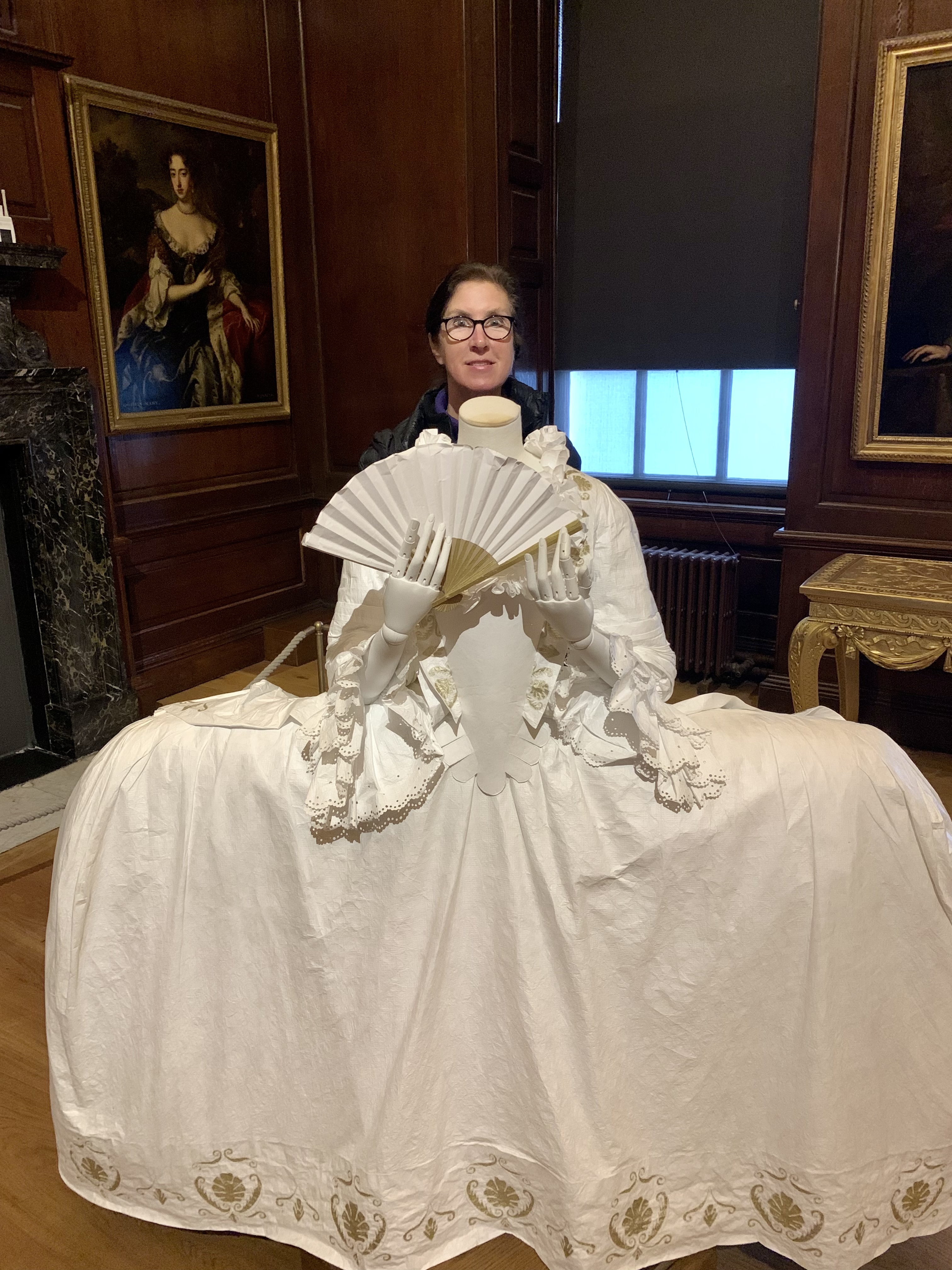
Kensington Palace:  Home to several monarchs, Kensington Palace is a grand home in a beautiful setting.   We toured three sections of the palace which feature three different past kings and queens.  

William III and Mary II used the palace as a residence and party place in the late 1600’s.  

George II later used the palace to hold court.  His throne appears below, along with some courtiers, and a lovely ceiling in one of the rooms.  


Victoria was raised in the palace and lived there until age 18 when she became the Queen.  Below are some items from Victoria’s childhood, including a bassinet, a dollhouse and a mechanical theater that performs an Italian opera.  


Also included in the collection are artifacts from Victoria’s life as Queen. 


Thanks for visiting Kensington Palace with us.  

P.S.  At the palace, in case you need to locate the restroom, you can just follow the signs.  


Saturday, November 5, 2022

Welcome to Weymouth

Greetings from Weymouth.

After departing Cardiff in Wales, we traveled to England’s south coast to visit the seaside town of Weymouth in Dorset.  

Weymouth is known for a few things, including Summer fun on its beach.  Nearby is Portland, home to a Royal Navy base and quarries.   Also nearby is Chesil Beach, more about that shortly   

Weymouth went from being a sleepy seaside town to a much sought after destination about 200 years ago, when the doctors of King George III advised him to go to the sea for his poor health.  So, he visited his brother the Duke of Gloucester and, before you know it, everybody had to visit Weymouth.  In fact, new accommodations had to be built.  We are staying in one of the former royal apartments, a beachfront house on Gloucester Row.  After the Victorian era, working class Londoners thronged Weymouth.  Today, Weymouth is a vibrant beachside escape in the Summer.   

Here are a few scenes from Weymouth:  a statue of King George III, a replica of a bathing cart and the Jubilee clock   


The beach at Weymouth is long and wide and remains shallow and flat, even far from shore.  The king’s bathing cart (like the replica below) was drawn by horses away from the beach and he descended into the water, away from prying eyes.  Later, bathing carts were used by fashionable ladies. 


Above, some random hottie stands in the doorway of her fashionable hotel. 

Near Weymouth is the Isle of Portland, a large island with villages, quarries, a fort built by Henry VIII and a large naval base.  The aircraft carrier HMS Queen Elizabeth calls Portland home and was steaming in the bay during our visit.  Portland is a huge rock rising high out of the sea, hence the quarries.  All of the homes and other buildings are made from local stone, which is necessary so they can withstand the high winds of Portland. 

We enjoyed a bus tour of Portland to see some of its sights.  What made the bus ride thrilling was our driver, who was in training.  So, driving around twisting, hilly roads near steep drops was an experience we didn’t expect.  Obviously, we survived.  We ended our island tour at the national sailing center where we saw some Olympic sailors prepping their boat.  

After Portland, our next stop was Chesil Beach and Fleet Lagoon.  


What makes Chesil Beach so unique is its composition.  The beach is directly on the English Channel and consists of a high, wide dune that leads down to the water. The dune is not a sand dune.  Instead, the dune consists of millions and millions of medium-sized round pebbles that have been polished smooth by natural forces.  The beach is lovely and stretches for nearly 20 miles.  


On the landward side of Chesil Beach is a narrow strip of water that runs between the beach and the cliffs.  Known as the Fleet Lagoon (“fleet” means shallow), the body of water is home to abundant sea birds and other wildlife. 


The views from Weymouth are lovely.  Below, the photo shows Weymouth Bay and distant white chalk cliffs along the coast.  


Thanks for visiting Weymouth with us.  

P.S.  At a marina in Weymouth, Greg spotted the sign below.  A slippery slipway?  Who knew.  

Friday, November 4, 2022

Cardiff Castle

A highlight of visiting Cardiff is touring Cardiff Castle.


Like other castles we have visited, the castle in Cardiff has a long and varied history.  The Romans arrived in Cardiff in 48 A.D.  They were looking to conquer the region and extract its gold.  They built a series of forts, but eventually left town in the 400’s.  
Fast forward to the Norman era.  In the 11th and 12 centuries, a hill and wooden fort were built.  Later, a stone fortress was constructed, which is still standing.  

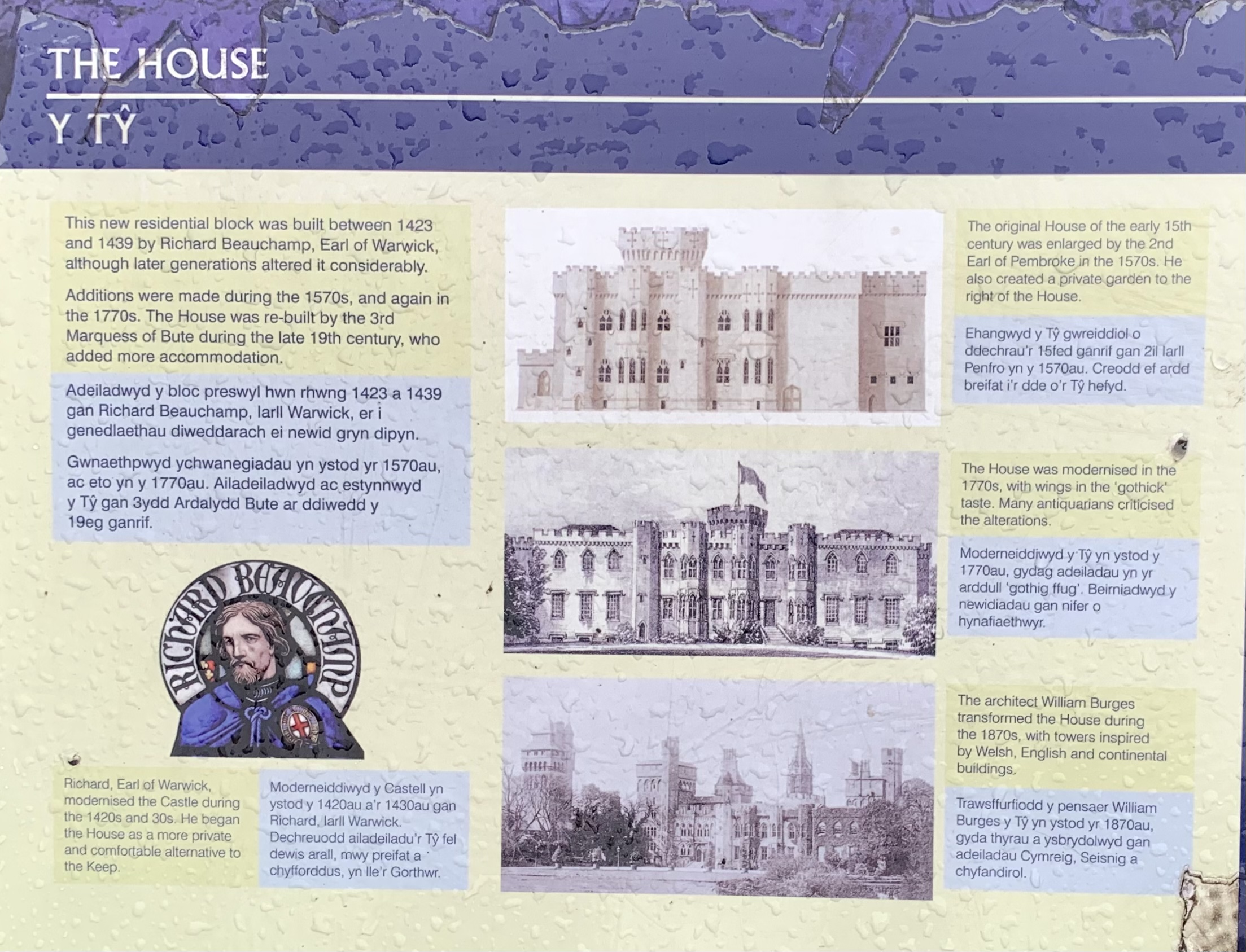
Fast forward to the 1400’s, a stately home was built close to the fort.  The home was renovated and expanded over the next five centuries.  The last work was completed during the late 19th century in a Victorian-Medieval style and the home is extremely well preserved.  

Thus, Cardiff Castle is a sort of time capsule, covering nearly 2000 years of life in Cardiff.  We visited each part and below is a photographic tour.  

The Norman Castle:


Below is a barren stone room in the tower of the castle keep.  However, when the castle served as a home, the same room was comfortably luxurious, as illustrated in the depiction below.  


Below, some random hottie enjoys a view of lovely autumn leaves near the castle.  


Nearby is the stately home built and expanded during the 15th to 19th centuries.  The exterior is impressive but it is surpassed by the ornate interiors, which are extremely well preserved.


In the room pictured below, King Charles III recently met with First Minister of Wales.  A photo on the table (at left) commemorates the meeting.  

The Roman fort was quite large but little remains today, except some walls that have been partly excavated.


Below, you know who states next to one of the walls of the Roman fort.  

A recent addition to the site is a 1980’s mural that depicts life in the pre-Roman and Roman eras.   When the Romans arrived, a group named the Silurian inhabited the region.  The two groups battled for three decades and eventually reached a peaceful arrangement, based on the Romans trading silver for the Silurian’s gold.  


Thanks for visiting Cardiff Castle with us.  

P.S.  Some random hottie apparently did something and was put in the stocks.  Well deserved, to be sure.